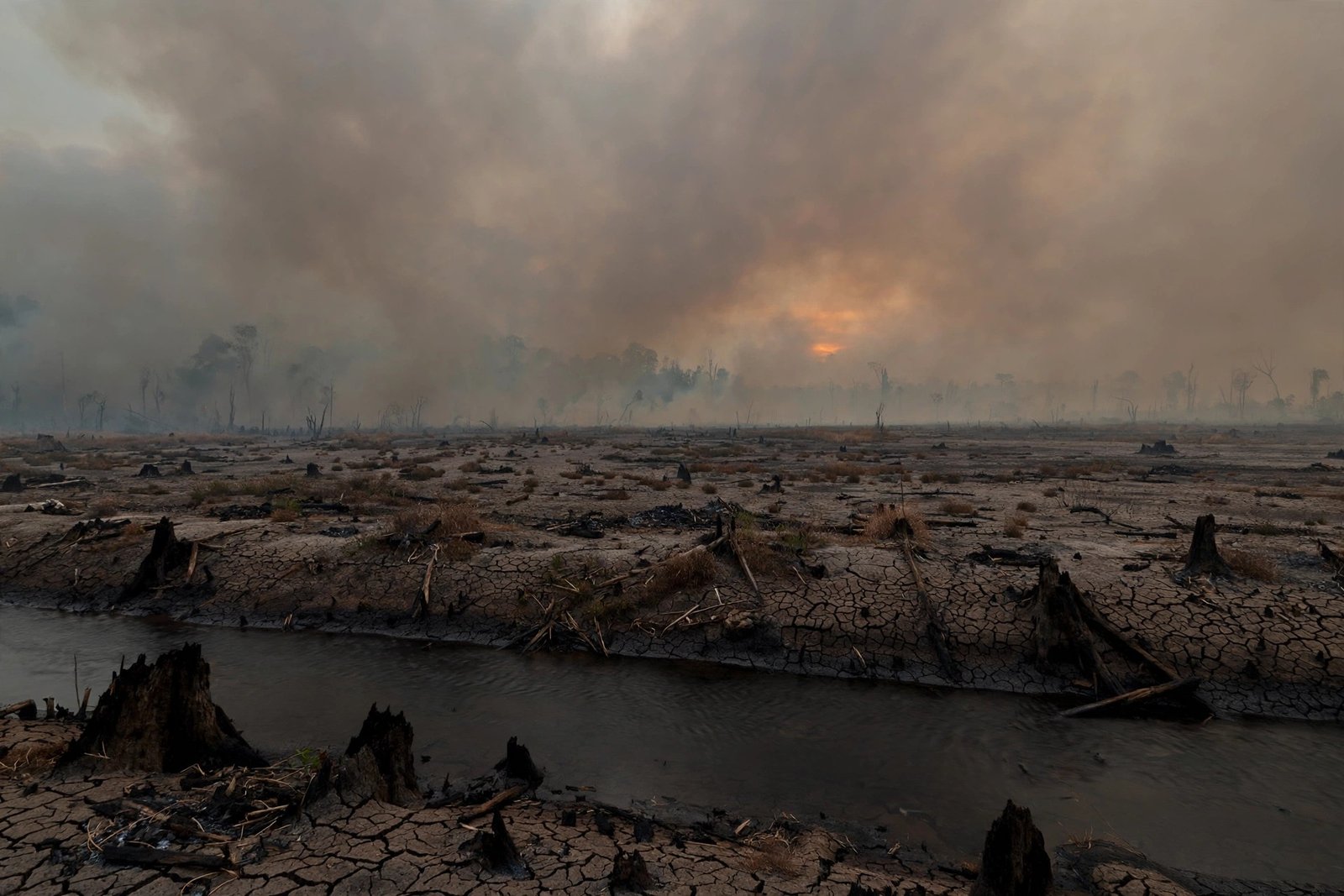
The 2026 fire season was not a failure of firefighting. It was the predictable result of drained peat, contested tenure, and a weakening liability regime, met by a state that had been warned and was not ready. This policy brief, drawing on the Institute’s national webinar of 9 November 2026 and on research conducted the same week, sets out what the season proved, what remains unverified, and what must change before the next dry season.
There is no single agreed burned-area total for 2026, enforcement was extensive on paper and unverified in court, and three legal uncertainties now stand between the state and accountability: the local-wisdom exception narrowed by Inpres 11/2026, the open effect of Article 613(3) of UU 1/2026, and the mismatch between district responsibility and district authority. The brief states each figure with its evidence label and lists 22 items that could not be verified, so that a ministerial reader can see what still needs primary confirmation.
The recommendations are phased: publish one reconciled record and fund alternatives and rewetting before the next dry season, clarify the law and execute judgments within two years, and decide the future of the 12.7 million hectare critical-land estate on published maps. If the official total is still unpublished, the peat agency still lacks a forming regulation, or no 2026 case has reached judgment within a year, the system should be treated as failing on its own terms.